LLM Agents for Apps: Pros and Cons
Definition of an Agent
An agent is an entity that perceives its surrounding environment through sensors and acts through actuators. In the LLM context, an autonomous agent leverages the model’s capabilities to perceive, plan, and act.
An example: Voyager, an LLM agent that explores and masters Minecraft autonomously.
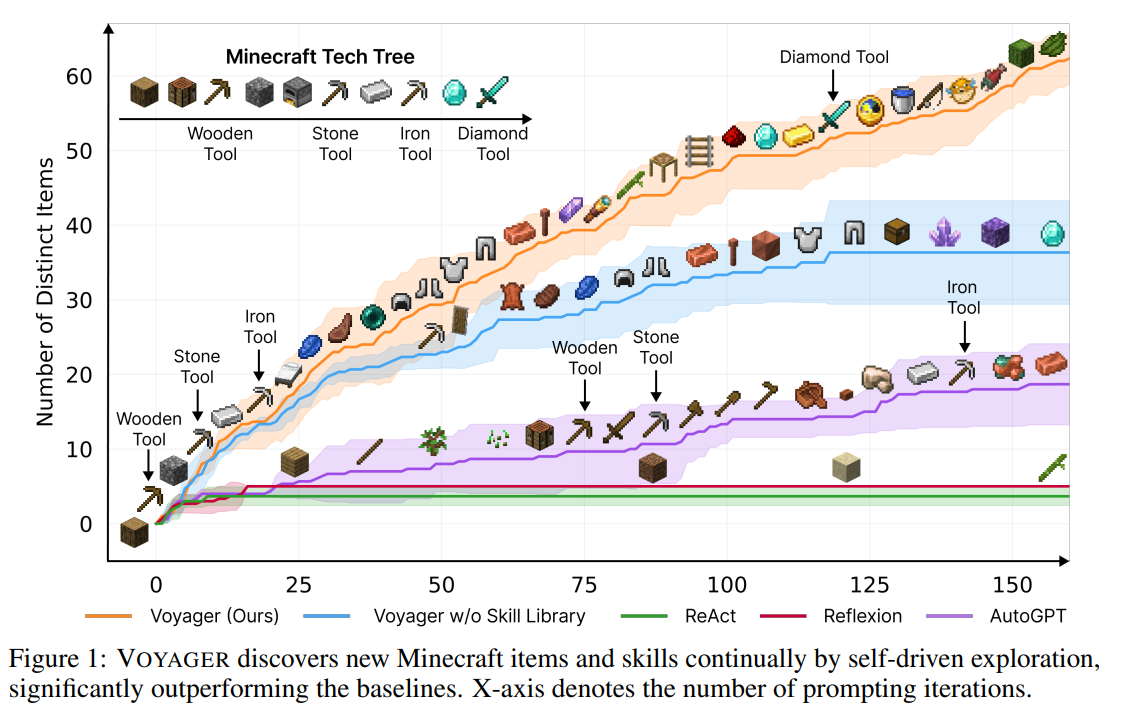 Voyager outperforms other LLM agents (ReAct, Reflexion, AutoGPT) in autonomous Minecraft exploration.
Pros
LLM agents leverage a vast knowledge base. Frameworks like LangChain facilitate development with support for:
- Memory management
- External tool integration
- Data retrieval
Cons: Security
Security is the main challenge:
- Prompt injection — input manipulation to alter behavior
- Privacy violations and cybersecurity risks
- OWASP Top 10 for LLM Applications
Mitigation strategies:
- Rigorous input filters
- Human-in-the-loop approval
- Sandboxing of agent actions
Conclusion
The balance between security and functionality requires continuous collaboration between developers and researchers. The power of LLM agents is real, but so are the risks.